Australia has so far guided AI with existing laws and voluntary standards, rather than a single AI Act. In July and August 2026 the government set out a different direction: national standards, a new office to coordinate them, and a parliamentary committee to test whether today’s laws are enough.
From voluntary guidance to national standards
Until now, organisations have been pointed to technology-neutral laws and voluntary material. That includes the AI Ethics Principles (2019), the Voluntary AI Safety Standard (2024) and Guidance for AI Adoption (2025).
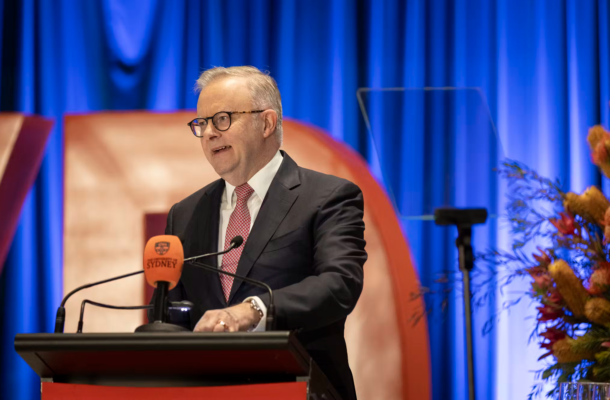
On 15 July 2026 the Prime Minister, Anthony Albanese, signalled a shift. The government plans one national framework so AI standards are applied in a consistent way. The detail is still being written. Supporting legislation is expected in Parliament in early 2027. That is a change from the December 2025 National AI Plan, which favoured voluntary guidance and smaller changes to existing laws.
Data centres, creators and a new office
The standards are expected to set strict requirements for large data centres, strengthen rights for artists and other creators, and guide responsible use of AI. A new Office of AI, inside the Department of the Prime Minister and Cabinet, will coordinate the standards and bring AI work across government into one place.
For data centres, the government has described rules on energy and water. Operators would underwrite new power supply, including renewable energy, and put more electricity back into the grid than they use. They would also limit water use and pay for extra water infrastructure. Large centres would be encouraged to ease their power use when the grid needs support. Planning rules are meant to be more uniform, so state and local delays shrink and approvals to build data centres can move faster.
Safety, copyright and a parliamentary check
On 20 July 2026 the government listed five consumer-safety priorities. They include a digital duty of care so AI companies design for safety and deal with harm early, a further round of privacy reform for AI services, safer use of AI at work, a check on whether consumer law covers retail surveillance pricing and agentic commerce, and a framework for automated decisions by federal agencies. The list is a guide, not a full programme.
On copyright, the Prime Minister has pointed to stronger protection so Australian artists and media keep control of their work, and so that work is not used to train AI without permission. A text and data mining exception remains ruled out, and consultation on any further copyright law continues. The July speech treated AI as a way to lift productivity and create jobs. It did not spell out risks to existing roles. The government has said it will talk with employers, workers and unions about adoption, skills and upskilling, and it will treat AI as an urgent priority for defence and national security, including misuse by extremists and other bad actors.
On 20 August 2026 the House and the Senate appointed a Joint Select Committee on Artificial Intelligence. It will look at opportunity, barriers, sovereign capability and the effect on jobs and skills, and at whether current laws are adequate. That review includes copyright, national security, data sovereignty, consumer protection, deepfakes and cyber security. The committee is due to report on 30 November 2026.
Key points
- National AI standards are planned, with legislation expected in Parliament in early 2027. The text is not settled yet.
- Large data centres, creators’ rights and a new Office of AI are already part of the direction.
- A parliamentary committee will report by 30 November 2026 on gaps in existing law, including cyber security and deepfakes.
Need help applying this to your organisation? Talk to Cybervisory.